Four resources with immediate and long-term uses
Silver, timber, iron, and herbs support buildings, upgrades, recruitment, repair, storage, market exchange, and emergency decisions. A resource is not valuable merely because its number rises; it matters because spending it closes one risk while leaving another exposed.
Production buildings compete with frontline defenses for workers and materials. Expanding too early can leave the pass open, while ignoring logistics makes post-battle recovery impossible.
Survival continues after combat
A broken wall leaves a persistent breach. Damaged towers and blocked work sites do not recover through decorative animation: repairs read real hit points, consume actual work, and require a reachable Builder.
Between deployments, players decide which defensive layer to restore, whether to expand the workforce, and which inventory shortage is most dangerous. Later challenge comes from throughput and conflicting objectives rather than unlimited enemy-stat inflation.
A focused alternative to city builders
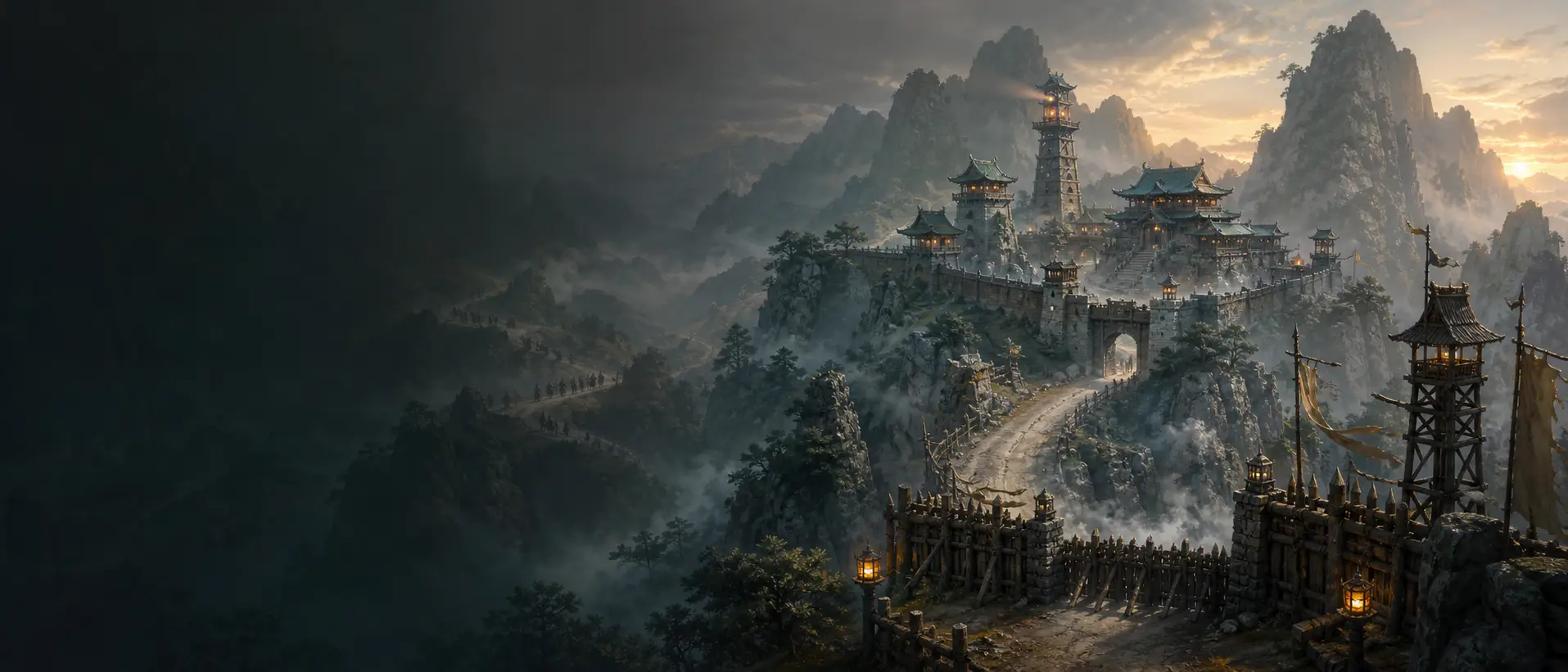
Jianghu Pass is not a broad city-building simulator. Its economy exists to support one readable survival problem: hold a strategic mountain pass. That focus suits players searching for compact base defense, fortress management, and single-player survival strategy rather than a sprawling sandbox. You can also review our comparisons with other defense titles.